Iran road transit holds at 12.4m tons despite disruptions
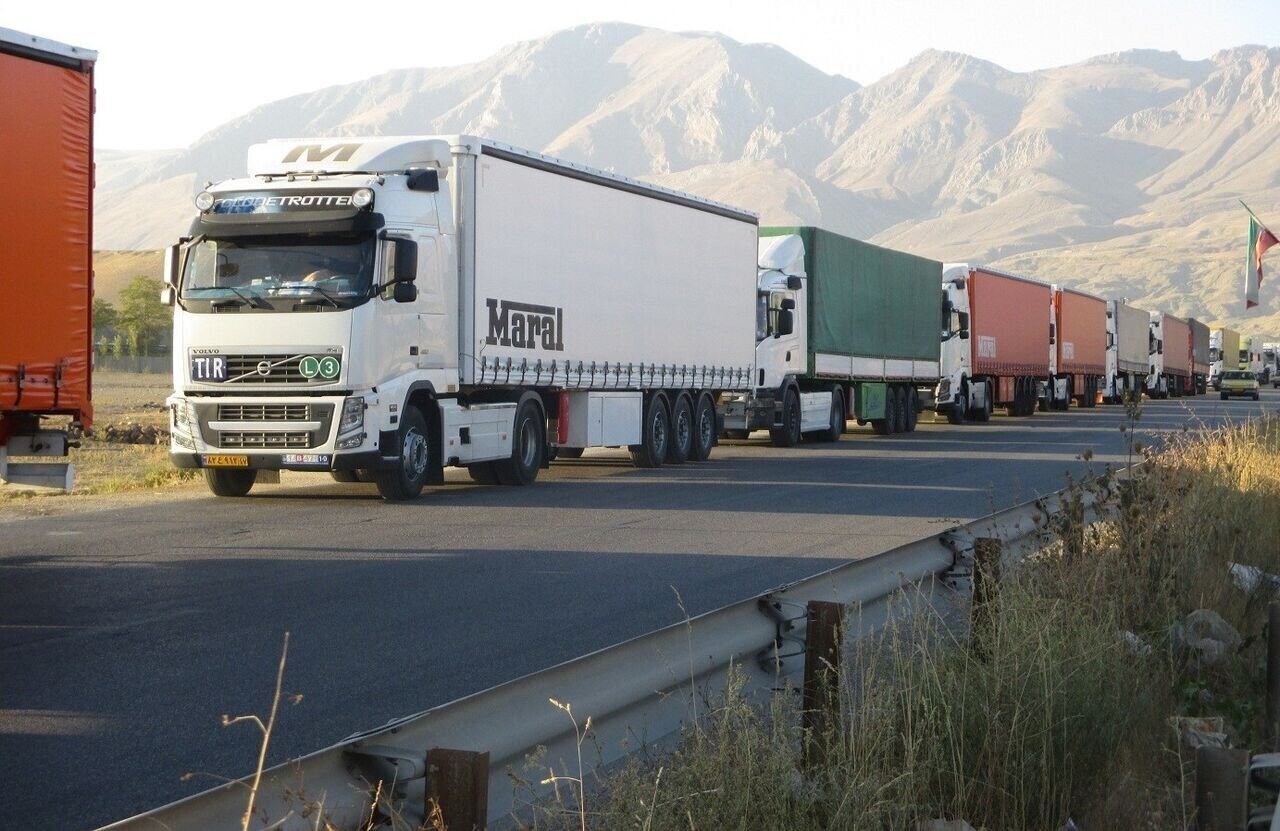
TEHRAN – Iran recorded 12.44 million tons of road transit cargo in the first nine months of the current Iranian year (march-December, 2025), maintaining volumes broadly in line with last year despite regional tensions and infrastructure incidents, a senior transport official said.
Javad Hedayati, director general for transit and international transport at the Road Maintenance and Transportation Organization, said road transit through Iran’s land borders remained stable even though a 50 to 60 percent decline had been expected following recent disruptions.
He cited the 12-day war imposed by Israel, a fire at Shahid Rajaee port, a fall in global oil prices and drivers’ protests as factors that many believed would severely undermine Iran’s transit flows. “In practice, this did not happen, and in some corridors we even saw growth,” he said.
Hedayati said transit of oil cargoes had fallen to about half its previous level, while non-oil cargo transit continued to rise and was expected to maintain that trend.
He attributed part of the resilience to the launch of the National Transit Headquarters, which he said reflected the government’s push—backed by the president—to simplify and facilitate transit procedures. In early January, the body approved and circulated the “National Transit Program” under Iran’s Seventh National Development Plan, setting out a comprehensive roadmap to strengthen Iran’s role in regional and transregional value chains.
Hedayati added that upgrades to road infrastructure and expanded trade engagement with neighboring countries had helped boost exports and transit through Iranian territory.
He also pointed to a recent decision by Iran and Tajikistan to abolish visa requirements for international transport drivers from early March, saying the move, alongside lower administrative and documentary costs, would enhance the competitiveness of Iran’s transit routes.
According to official data, Iran handled transit cargo via 561,582 international truck journeys from the start of the year to the end of Azar, the ninth Iranian month. Over the same period, more than 10.01 million tons of goods were exported in around 419,000 trips, while imports exceeded 1.91 million tons across more than 87,000 journeys.
Iran's extensive road network, spanning over 220,000 kilometers, serves as the vital circulatory system for its domestic economy and its strategic position as a regional transit hub. As a key land bridge connecting the Caspian Sea to the Persian Gulf and Central Asia to Western Asia, Iran's highways are crucial for international Eurasian corridors.
Domestically, over 90 percent of passenger movement and more than 80 percent of total cargo transport rely on roads. This dominance is facilitated by a primary network of modern freeways and highways linking major cities, industrial centers, and ports. However, challenges persist, including maintenance needs in some regions, mountainous terrain affecting certain routes, and an aging segment of the national truck fleet.
For transit and international cargo, Iran's geographical advantage is paramount. Major corridors like the International North-South Transport Corridor (INSTC) and the East-West Corridor traverse the country, moving goods between Europe, Russia, the Caucasus, the Indian subcontinent, and the West Asia. Key border terminals such as Bazargan (Turkey), Parvizkhan (Iraq), and Milak (Afghanistan) handle significant volumes. The government actively promotes transit through infrastructure investment, streamlined customs procedures at dedicated dry ports, and bilateral agreements.
The road freight industry is predominantly private, characterized by a mix of large fleet operators and numerous small owner-drivers. While efficient for connectivity, the heavy reliance on road transport presents sustainability challenges, prompting gradual shifts toward rail for bulk and long-distance transit. Overall, Iran's roads remain the indispensable backbone of its logistics, underpinning both internal trade and its ambitious role as a continental crossroads.
EF/MA
Leave a Comment